
There are many different sizes of the puzzle. When you go shopping for someone, you’ll see that the 1,000-piece puzzle is the most common puzzle, with the most amazing visual selection and style selection. However, there are those who prefer larger pieces: 1500, 2000, to 50,000 pieces.
A 2,000-piece puzzle is not much different than 1,000. Someone who could wrestle with a 300-piece puzzle is as easy as 5,000 pieces. Not only can the number of pieces make the puzzle difficult to understand.
If you’re wondering how to approach a larger puzzle, I have some ideas.
By regularly solving puzzles, you will find out what is the best way for you. In addition to some experiences, there are three things that you really need to do a larger piece: space, time, and willingness to arrange.
A 2000-piece puzzle would not necessarily have to double the size of 1,000 pieces. These pieces may be larger or smaller, so you can’t always compare them, but you still need enough space. Check this box to find the game’s size complete, so that you can best prepare. I do puzzles at the end of the dining room, and I put them on a foam board from the dollar store. Having them on the foam table allows me to spin the puzzle so that I don’t have to stand up and change my seat. Many people have special puzzles or portable boxes, but there are limited options for puzzles over 1500 pieces. Most of them are expensive. Everyone wants to feel comfortable doing a riddle, especially when it takes time. Make sure there’s a space where you can reach out and feel comfortable.

I work full-time, and I have a young daughter. I do puzzles at night or weekend. I can usually do a thousand-piece puzzle in a week. If you have a lot of free time, you may be able to do a riddle faster, but how long it takes to make a puzzle is not always up to how much time you have.
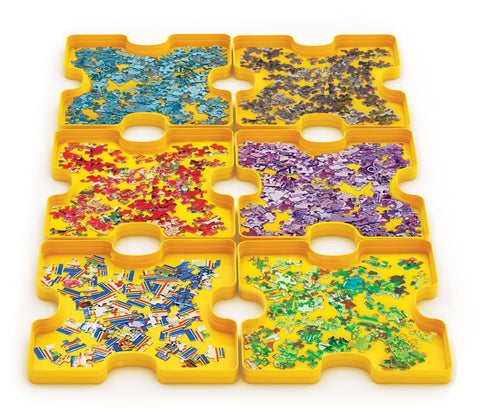
The key to any puzzle is how you classify the pieces. A larger puzzle will need to be arranged. The more time the classification takes, the easier the puzzle is to assemble. This is a personal approach. Whether you organize in color, shape or pattern, you need to sort. There are stacked trays, but some people use grills or dishes. Once you have sort of arranged, you can find important parts of the image that stands out (a red bicycle, a yellow sun, a green tree, etc.) and work there.
I hope it helps. No matter the size, each puzzle is unique and needs to be approached differently. Find a space, rest and rearrange. This is not a race, take your time. If it takes days, weeks, or months, just have fun. You can do it.